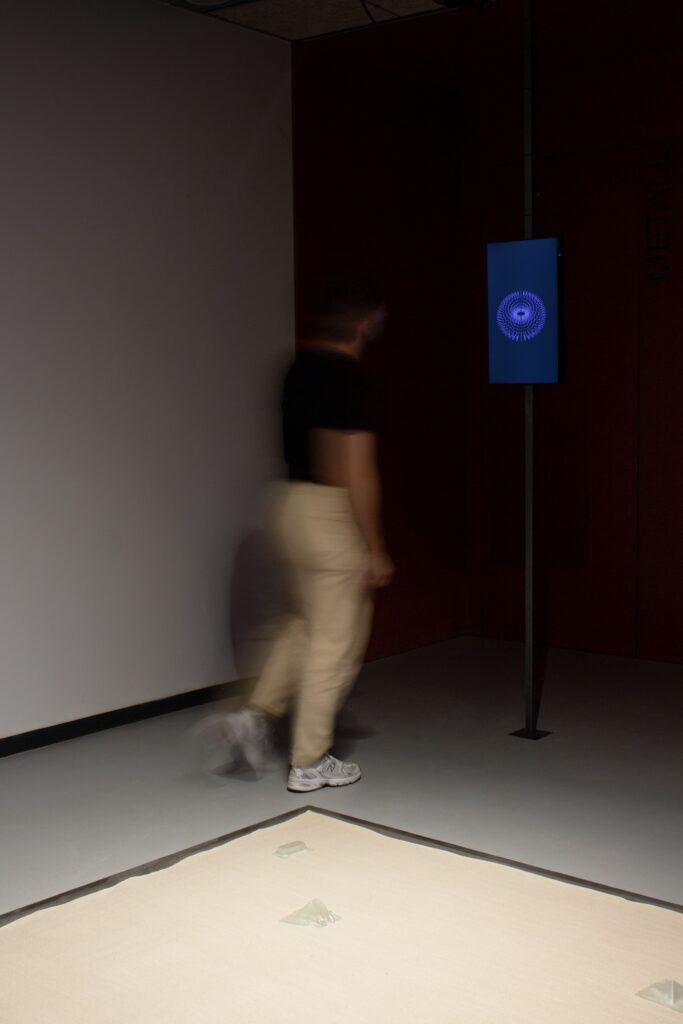
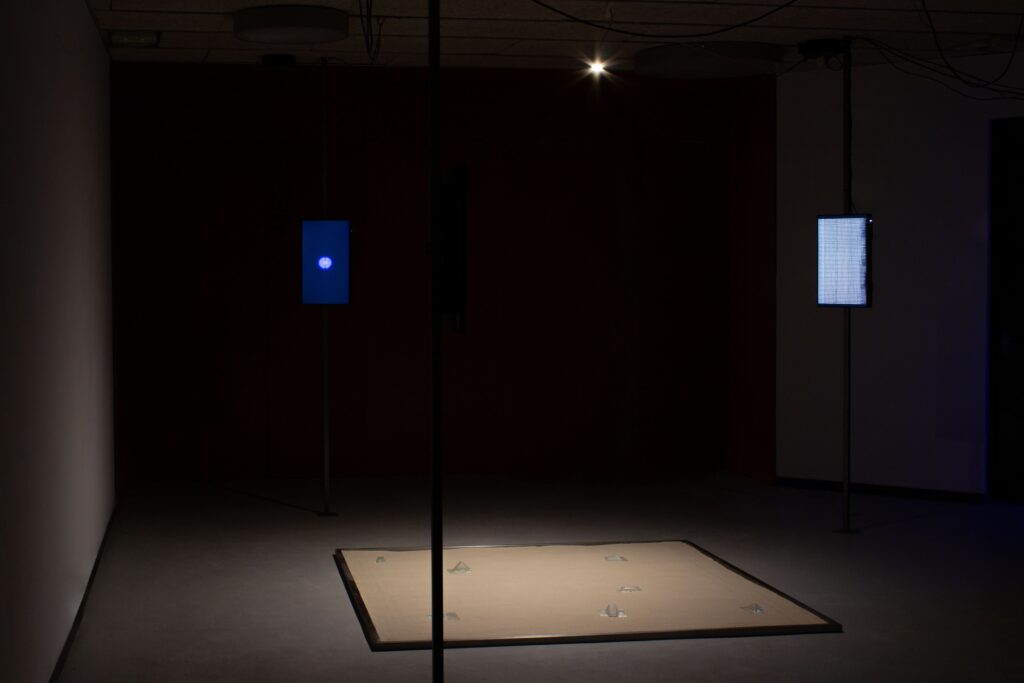
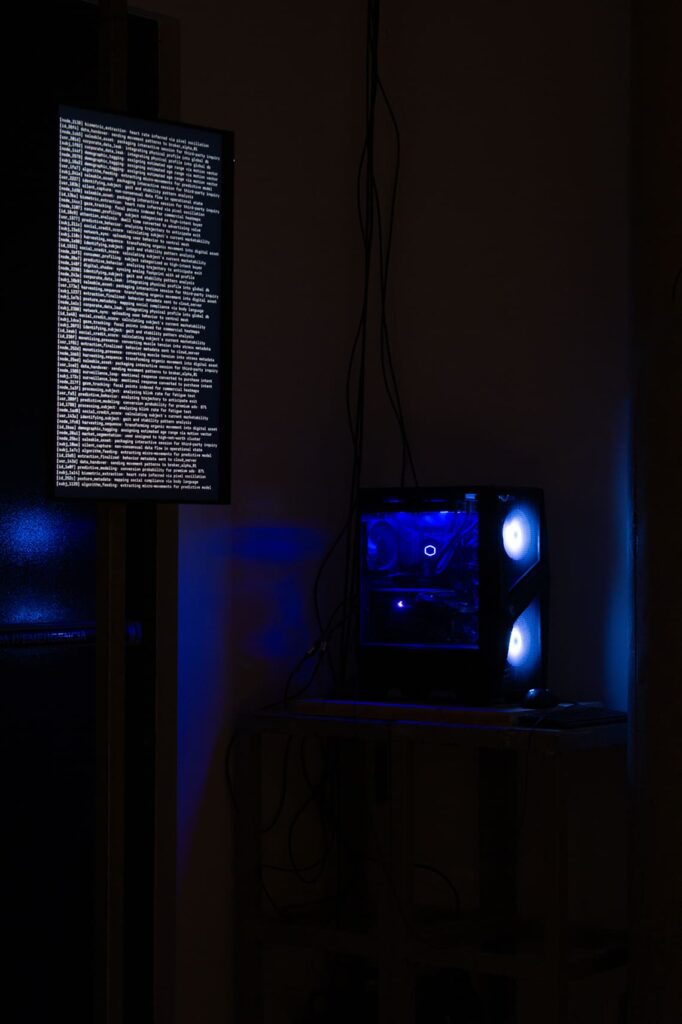
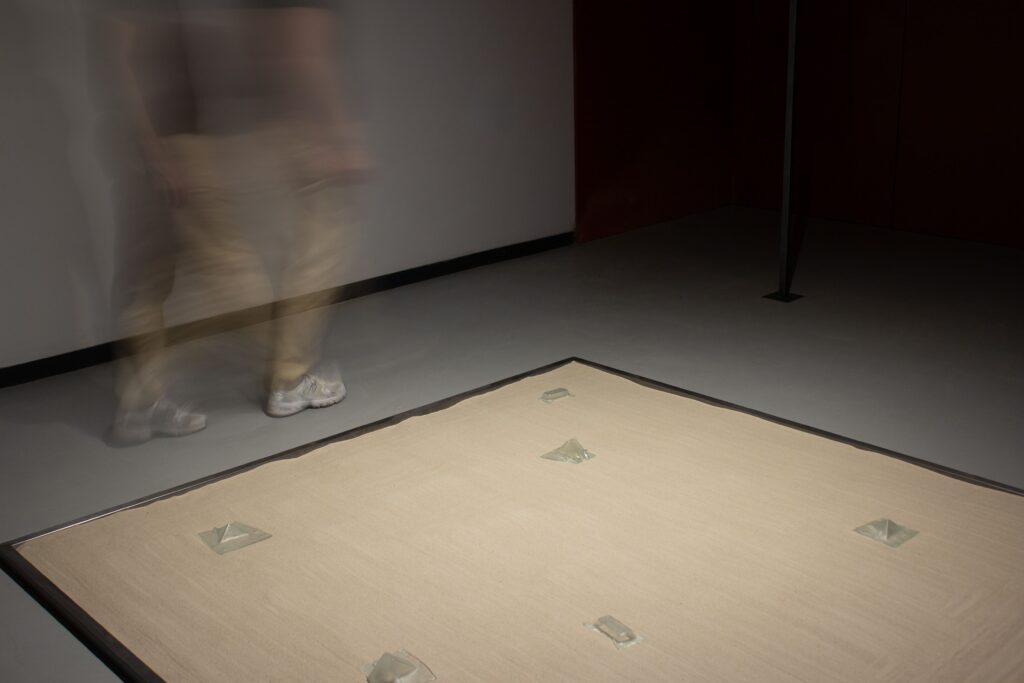
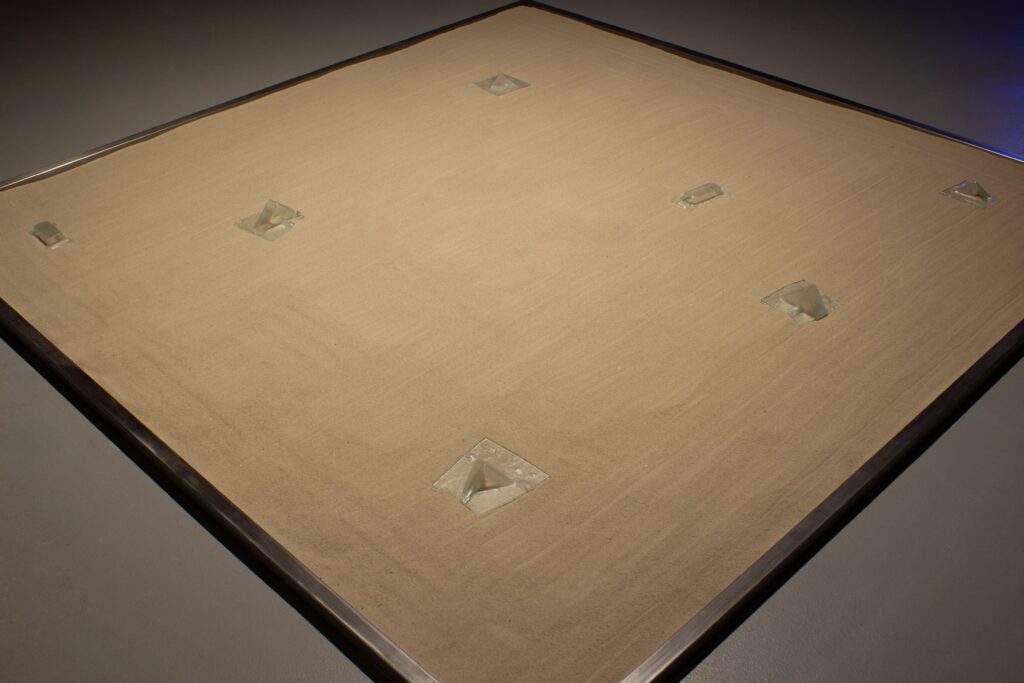
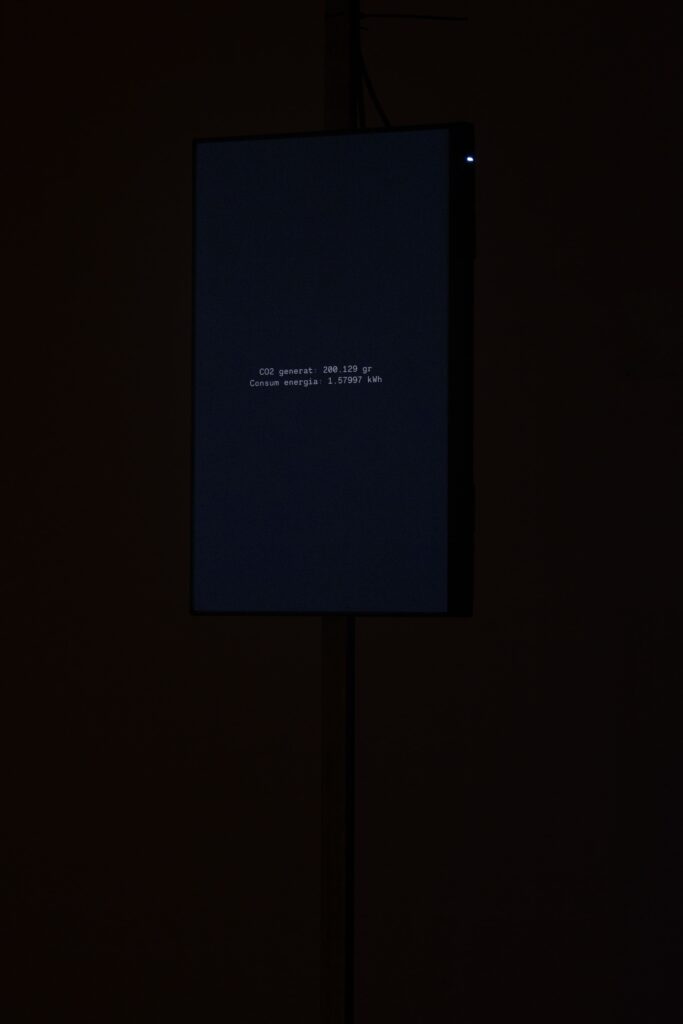
Think outside the (sand)box is an interactive installation composed of three elements in dialogue: a steel frame filled with silica sand, geometric glass pieces (evoking Fröbel’s “gifts”) and three screens connected to a computer.
The work investigates the ontology of the children’s sandpit as a political allegory of digital ecology, from its origins in 19th-century Prussia to its contemporary adoption as an algorithmic social control device.
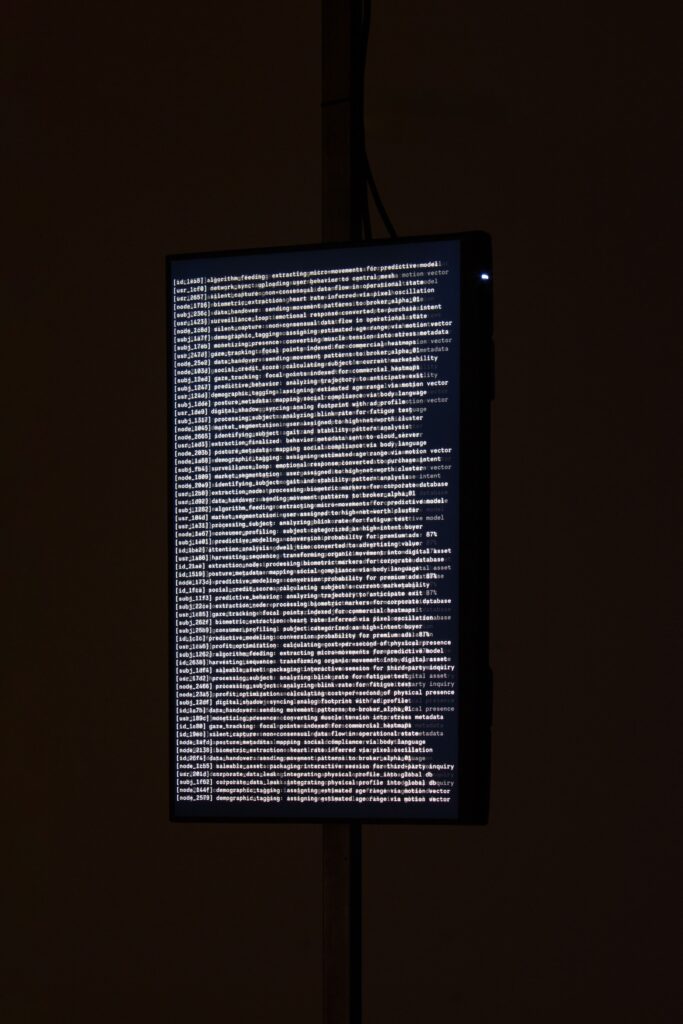
Through the piece’s physical materials (which are, precisely, the same ones from which all modern computing is extracted) and software that monitors the viewer in real time, the installation dismantles the corporate narrative of the digital cloud as an ethereal, clean, and immaterial space. The work exposes both the invisible surveillance and the high ecological cost hidden behind any seemingly virtual environment, revealing the global dynamics of extraction and the constant exploitation of our most mundane behavior.